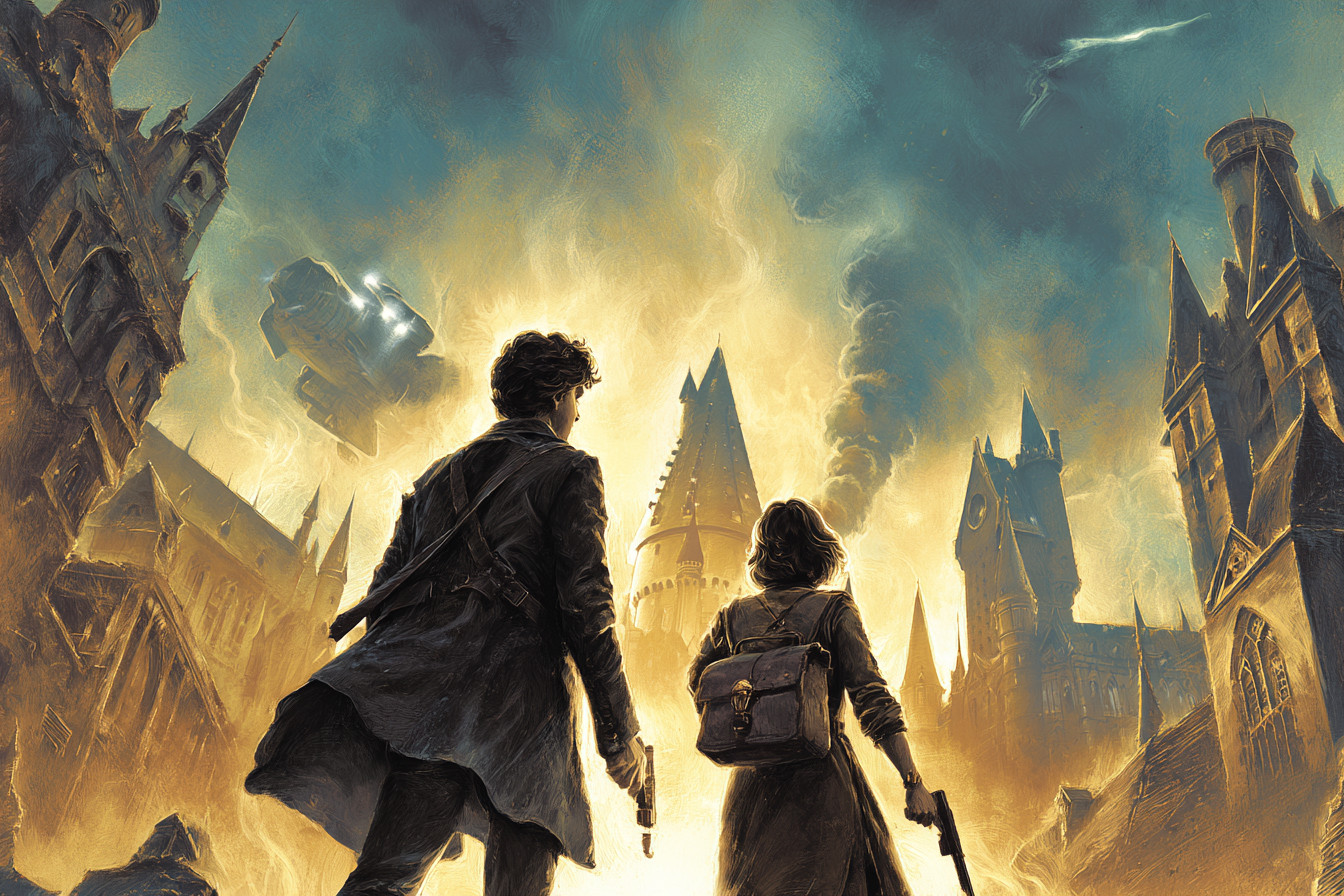

Harry Potter: Hogwarts Battle At A Glance
| Aspect | Details |
|---|---|
| Designer | Andrew Wolf |
| License | Harry Potter |
| Year Published | 2016 |
| Play Time (Solo) | 45-75 minutes |
| Complexity | Medium |
| Recommended Age | 10+ |
| Our Rating | 10/10 |
It’s really cool to see how Hogwarts Battle was designed. The game is so well-suited for new players because of the way it uses deck-building to teach players. Deck-building is a very common mechanism in modern board games, but most games expect players to already know how to use it. Hogwarts Battle does the opposite; it teaches deck-building through gradual progression over the course of seven years of schooling.
When we first started playing, we were simply buying cards and using them to fight the bad guys. As the years went on, however, we had to start thinking about which cards worked well together and how to get the maximum benefit out of our deck. This is the kind of thing that experienced players do automatically; they think about the cards in their deck when deciding which card to play next. New players, on the other hand, need to figure out these relationships through trial-and-error.
This may seem obvious now, but it wasn’t until much later that I realised how important this aspect of the game was. The way that the designer took a difficult mechanic and broke it down into manageable parts and gradually increased the complexity allowed us to grow as players without ever feeling overwhelmed.
I have used Hogwarts Battle in many different ways. I’ve played it with teenagers who had never played a modern board game before. I’ve played it with families who were trying to introduce their young children to the hobby. I’ve played it with friends who were looking for a lighter experience. And I’ve even played it with fellow gamers who were looking for a new experience to add to their collection.
So why is Hogwarts Battle such a great example of a “gateway” game? I believe it is because it takes no shortcuts in terms of its presentation of the game and its components. While it is true that the game is much simpler than some other games on this list, it is intended to be a gateway to those more complex experiences. The game does not try to hide the fact that it is a Harry Potter game, nor does it treat its players as though they are not intelligent enough to understand the game.

As I mentioned earlier, the game takes place at Hogwarts School of Witchcraft and Wizardry. Each location in the game represents a different area of the castle, and the enemies in the game represent the different threats to the school – Death Eaters, Dark Creatures, etc. What I find particularly interesting about this game is how the setting and theme of the game are integrated into the mechanics of the game.
While many games have themes and settings that are merely a backdrop for the gameplay, Hogwarts Battle is a game whose theme and setting inform the gameplay directly. For example, the Time-Turner is a key mechanic in the third year of the game. Players can use it to go back in time, allowing them to relive certain turns and try again. The Time-Turner is a major plot element in the books and movies, and it fits perfectly into the gameplay.
Another example of this is how the different locations in the game affect the gameplay. Some locations provide a bonus to the number of resources generated per turn, while others allow the player to heal. These effects fit perfectly into the story of the game, and they create a sense of immersion that is hard to achieve with purely abstract mechanics.
One of the things that I find particularly impressive about Hogwarts Battle is how it integrates the theme of the game into the mechanics of the game in a seamless way. The game is not simply a Harry Potter-themed version of a generic board game; it is a game that truly reflects the spirit of the franchise.
The game also features a point-tracking system, known as House Points, which rewards the players for completing tasks and purchases. The amount of House Points earned at the end of each year determines how well the players did overall.
I typically play on Standard difficulty. I find that Casual mode is too easy once you begin to understand the systems of the game. Hard mode is significantly harder, but still beatable. The difficulty options ensure that there is something for everyone.
Hogwarts Battle also scales well in solo mode. Depending on how many students you are playing as, the level of difficulty increases. Typically, I play as all four students, which adds more actions and more deck-building options. However, playing as fewer students adds a greater level of challenge.
I think what I enjoy most about Hogwarts Battle is that it is a game that is accessible to anyone, regardless of prior gaming experience. Even though it is a cooperative game, it can be played with as few as one player. At the same time, the game offers plenty of depth for more experienced players.
There are several factors that contribute to the accessibility of Hogwarts Battle. First and foremost is the simple nature of the gameplay. Once you understand the core mechanics, the rest of the game is straightforward. Additionally, the game is easy to teach to new players. Most of my friends who have played the game for the first time have picked up the basics immediately.
Another factor that contributes to the accessibility of Hogwarts Battle is the quality of the game’s components. The game comes with beautiful artwork and clear card designs that reflect the characters and locations of the Harry Potter universe. The rulebook is similarly well-written and easy to follow.
That being said, the game is certainly not simplistic. There are many layers to the game, and players will need to develop a good understanding of the mechanics and the various synergies between cards in order to succeed.

Overall, I believe that Hogwarts Battle is a fantastic choice for anyone who enjoys Harry Potter, or for anyone who wants to introduce themselves or others to the world of modern board games.
While it is not as complex as some of the other games on this list, I believe that Hogwarts Battle is a better representation of what a gateway game should look like. Many games on this list are either extremely simple, or extremely complex. Hogwarts Battle finds a happy medium between these two extremes.
Additionally, I would recommend Hogwarts Battle to anyone who is interested in experiencing the magic of Hogwarts through a board game. Whether you are a seasoned gamer or someone who has never played a board game in their life, I believe that Hogwarts Battle has something to offer.
In conclusion, I highly recommend Hogwarts Battle to anyone who is interested in cooperative gaming, Harry Potter, or just looking for a fun and engaging experience. The game offers a unique blend of gameplay and storytelling that I have yet to see in another game.

Janet’s a librarian from Bristol who swapped bedtime stories for board games. She writes about family-friendly titles that actually get played, balancing fun, fairness, and kids who can’t stand losing. Her motto: no game should last longer than a child’s attention span.