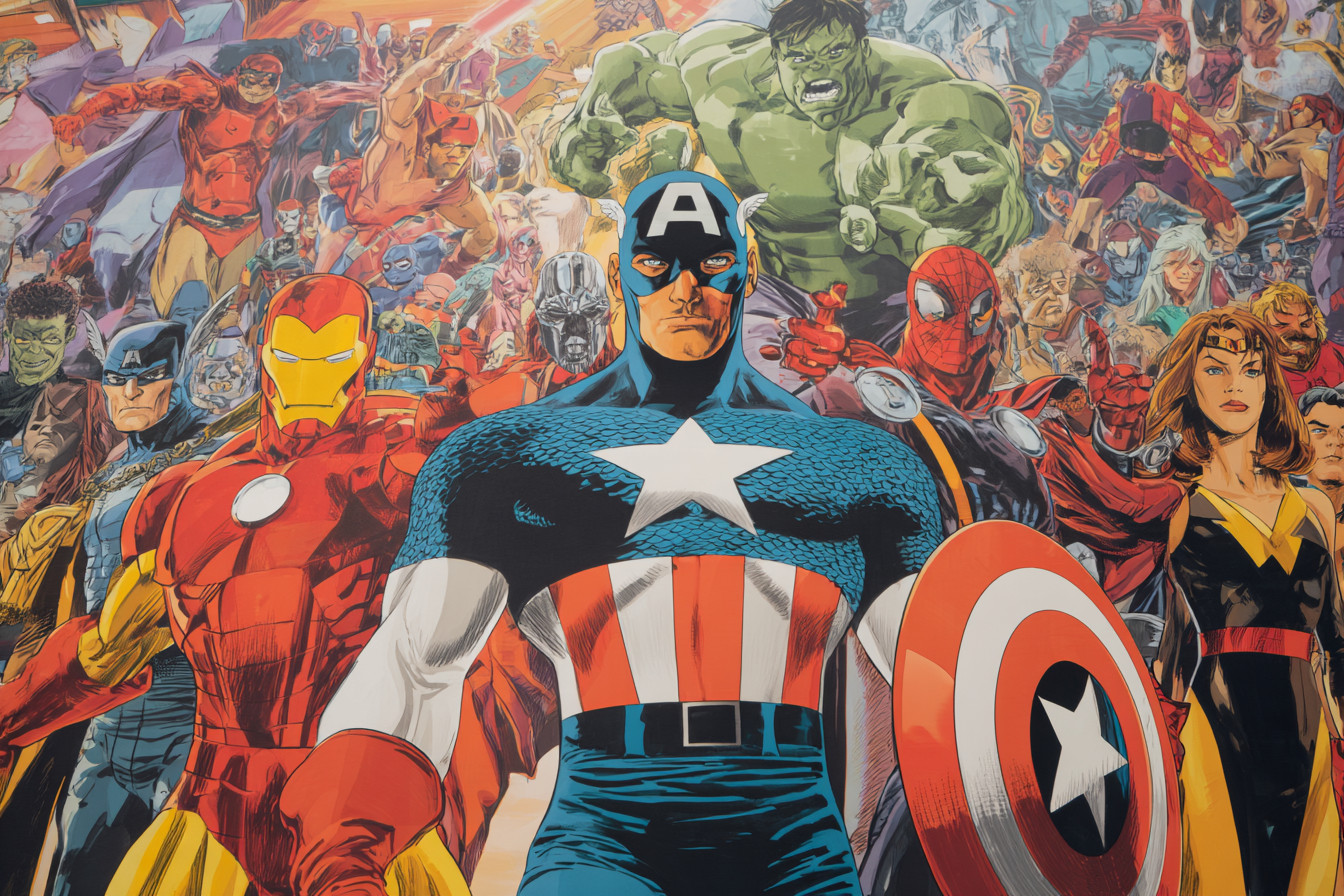

Marvel: Crisis Protocol At A Glance
| Aspect | Details |
|---|---|
| Designer | Eric M. Lang |
| License | Marvel Universe |
| Year Published | 2021 |
| Play Time (Solo) | 60-90 minutes |
| Complexity | Medium-Heavy |
| Recommended Age | 14+ |
| Our Rating | 10/10 |
Marvel: Crisis Protocol is a tactical battle game where you lead your favorite Marvel heroes into battle in the Marvel universe. Each battle takes place on a modular board that represents a Marvel setting such as Midtown Manhattan, Tokyo, Asgard, etc. Your objective is to defeat the opposing team and/or complete the objectives of the battle while using the powers of your heroes.
The core gameplay involves strategic placement of your heroes and the use of their powers to attack the enemy, complete objectives, or assist your fellow heroes. You manage your hero placement, power tokens (which represent the power used to activate special abilities), and the timing of your actions.
Different battles present different objectives. Battle objectives may include controlling areas of the battlefield, protecting civilians, defeating a particular enemy, etc. The many battle objectives and settings present different strategic challenges.
Powers as Mechanics
Here’s where Crisis Protocol stands out from the pack. Each character in Crisis Protocol has mechanical representations of their real-world powers.
Iron Man has an armor system. When he takes damage, his armor upgrades are lost. However, those upgrades also give him benefits. So, you’re constantly weighing whether to use armor benefits versus preserving them.
Spider-Man has web mechanics. He can place webs to limit the movement of his enemies. Web tokens are generated when you take web-related actions, and he uses them to enhance his actions.
Doctor Strange casts spells, and the number of times he can cast those spells is represented by power tokens. Powerful spells consume more power tokens.
Black Widow has precision in her attacks. Her actions are low-cost, but she provides opportunities for her teammates to act.
Thor has brute force in his actions. His powerful attacks cost a lot of power tokens but will obliterate his opponents.
All characters play fundamentally differently. No two characters are simply a copy of another; they have distinct mechanical differences based on their narrative roles.
This generates team-building puzzles. Which character combinations produce the greatest synergy? Which characters help other characters achieve their potential? Which characters rely on others to succeed?
I’ve played aggressively powered teams (Thor, Hulk, Colossus) that dominated the opponent with sheer power. I’ve played defensively oriented teams (Black Widow, Spider-Man, Hawkeye) that controlled the battlefield with positioning. I’ve played hybrid teams attempting to do both offense and control moderately well.
Different team compositions create different strategic approaches.
Power Tokens: Managing Resources
Your characters use power tokens to access their special abilities. Different abilities consume different numbers of power tokens. Expensive abilities consume more power tokens. Less expensive abilities consume fewer power tokens.
At the start of each player’s turn, you receive power tokens. You must determine which abilities to utilize with your power tokens. Will you use your power tokens for offense? For control? To protect your heroes? To save your heroes’ lives?
Power tokens generate emergent problems and decisions. There’s no way to utilize every ability every turn. You must prioritise the most important abilities to utilize this turn.
I’ve played games where I’ve been starved of power tokens and I’ve had to conserve my actions. I’ve played games where I’ve had plenty of power tokens and I’m able to be aggressive.
Emergent Problems Through Resource Management
Crisis Protocol has many different battle scenarios and objectives. Battle scenarios vary in terms of what objectives you must accomplish. Control areas. Protect civilians. Kill specific enemies. Recover artifacts. Survive enemy waves.
Battle scenarios offer a wide range of tactical puzzles. Area control requires positioning. Protecting civilians requires mobility and defensive capabilities. Killing specific enemies requires concentrated firepower.
The variety of battle scenarios creates a wide range of possible strategic challenges depending on your team composition. A team capable of area control may struggle to kill enemies, and vice versa.
Does Marvel: Crisis Protocol Remain Relevant?
Marvel: Crisis Protocol was first released in 2021. It is now 2026. Over the years since its release, the game has seen additional characters added to its roster, and more battle scenarios (scenario packs). Crisis Protocol still remains one of the top superhero tactical games.
Components of the game are exceptional. Character miniatures are beautifully painted. The scenario boards are highly detailed. Power tokens are easy to read. The rule book is comprehensive, and very organised. Teaching the game to new players typically takes between 20-30 minutes due to the large number of character powers to teach, however the core system is straightforward.
My biggest complaint is that teaching new players requires teaching character powers. While this can be overwhelming to some, once new players understand the mechanical aspects of their character(s), play tends to flow smoothly.
Setup Time and Ease of Access
Setup time for Marvel: Crisis Protocol is around 15-20 minutes. This includes creating the character teams, laying down the scenario tiles, and preparing the scenario conditions. The game is moderately complex.
Teaching time for new players is 20-30 minutes. You’ll be teaching the basic movement and attack system, as well as the unique powers of each character.
Game length is 60-90 minutes. This is a reasonable amount of time to dedicate to a single tactical battle.
Rules Overhead
The rules overhead for Crisis Protocol is moderate to high. You are responsible for managing the character-specific mechanics. However, the core system of movement and attacking is consistent among all characters — the unique abilities are what differentiate the characters.
Building Teams: Finding Synergies and Combinations
This is where the depth of strategy in the game becomes apparent. Which character combinations create synergy? How do the abilities of individual characters combine to form effective teams? Which character combinations create complementary strengths and weaknesses?
I’ve created teams designed specifically to deal massive amounts of damage. I’ve created defensive teams designed to control the battlefield. I’ve created hybrid teams attempting to achieve both offense and control moderately effectively.
Each team composition excels in a particular type of battle scenario. Figuring out which teams are effective in each battle is a key part of the puzzle.
I’ve played games where my team composition perfectly matched the battle scenario. I’ve played games where my team composition did not fit the battle scenario well, and I was forced to adjust mid-game.
Unlocking New Characters and Expanding Options
Marvel: Crisis Protocol has a wide array of playable characters. Many of these characters were introduced after the base game. These additional characters introduce new options for building teams.
I’ve played with only the original characters and with a larger pool of characters. The addition of new characters introduces new team-building possibilities.
The abundance of characters ensures that the game remains replayable for a long time. New characters allow for new team compositions.
Why You Should Play This Solo
If you are a fan of Marvel Superheroes — this game embodies the spirit of the comics with the mechanics.
If you like tactical combat games that incorporate the actual abilities of your characters — Crisis Protocol offers a rich and challenging system of tactical combat.
If you want to build teams of Superheroes that accurately reflect the spirit of the comic books — the character synergies in Crisis Protocol create a sense of authenticity.
If you want a modular battle environment that presents you with a variety of tactical challenges — the variety of battle environments in Crisis Protocol keeps the experience fresh.
If you want to play a game that gives each character mechanical systems that accurately represent their actual powers — Crisis Protocol does an outstanding job of providing accurate mechanical systems for each character.
Conclusion
Marvel: Crisis Protocol is an incredible 10/10 tactical game. The mechanical systems of the characters embody the powers of the comic book characters. The puzzles of building teams create a true sense of problem-solving. The variety of battle scenarios creates new challenges for each team composition. The design of the game as a solo experience makes it easy to experiment with new characters and team compositions.
I’ve played Crisis Protocol 29 times with a variety of characters and battle scenarios. I am continuing to find the optimal combination of characters for certain battle scenarios. I would like to improve my ability to manage power tokens with a variety of characters. I want to continue to play a variety of character combinations as the game grows.
Crisis Protocol demonstrates that a good superhero game should allow players to engage with the powers of the characters. The game does not reduce characters to generic statistics. Instead, each character has mechanical systems that represent their actual powers and roles in the story.
See our breakdown of the top 10 movie tie in games

Evelyn’s a retired accountant who swapped spreadsheets for score sheets. She writes sharp, analytical takes on complex strategy games—proof that experience always outplays luck. Don’t underestimate her in a game of Terraforming Mars. You’ll regret it.