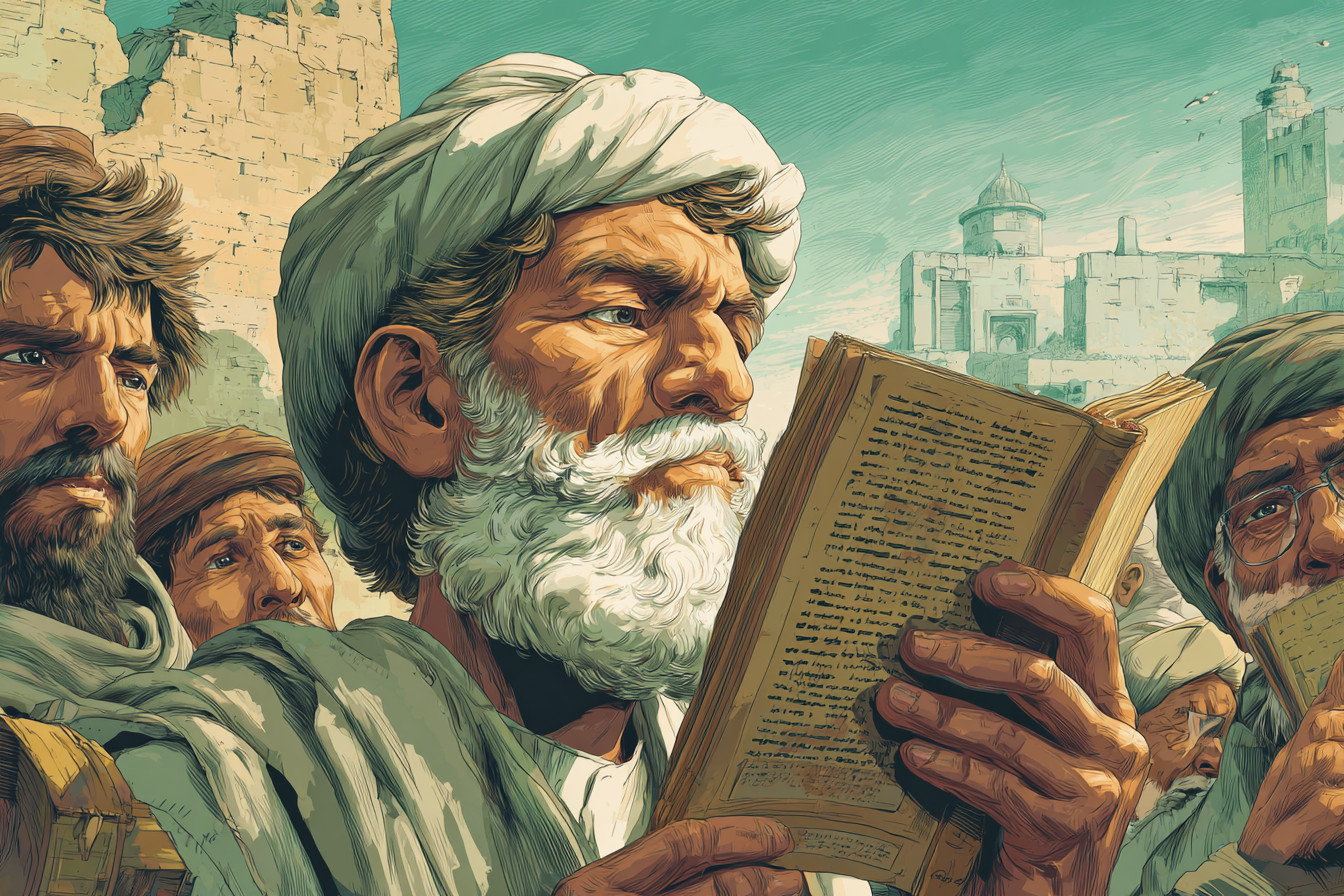

Timing Is Everything In The Great Game
Man, I still cringe when I think back on my very first major coalition timing failure in Pax Pamir. I am at Sarah’s dining table with the usual suspects – me, Sarah, our buddy Marcus, and this dude Jake we met at the local game store. I’d been playing for about six or seven times, and I thought I was getting the hang of Cole Wehrle’s masterpiece. I had created a nice little Afghan network all over the board with tribal units and roads, and I felt like I was really getting it.
Then the Brits started surging.
I watched it happen – cards coming to the market, other players changing allegiances, British influence blocks multiplying across Afghanistan. And what did I do? Nothing. I literally just sat there like some sort of obstinate historical figure who wouldn’t budge no matter how much history was changing around him. “I’m committed to the Afghan cause,” I kept repeating, as though this was a roleplaying game and not a real game where winning mattered.
Two whole turns passed before I realised my mistake and changed allegiance. Two turns where I could’ve jumped on the British bandwagon and established myself as a major player in the coalition.
By the time I finally figured things out and switched sides, Sarah had already locked down British dominance. She had collected British court cards, built influence, and put herself in the right place. When I finally arrived at the British party, I was essentially the person who shows up after all the good food is gone. The dominance cheque hit like clockwork, and I watched Sarah roll to victory while I picked up some lame participation trophy for my tiny contribution to British success.
“Timing is everything in the Great Game,” Marcus said afterwards, and honestly? I wanted to toss a game piece at him. Not because he was wrong — because he was dead-on correct, and I had just found that out the hard way.
That night, I went home and immediately started a gaming journal. I know it sounds crazy — keeping detailed records of every board game I play, like some kind of hyper-vigilant weirdo. But after that painful lesson, I was determined to never misread coalition momentum so badly again. Ever since then, I track coalition strengths, note timing trends, analyse what I’ve missed. Sarah gives me crap for it, says it’s my “Pamir paranoia.” But those journals have paid off more times than I can count.
Through all that obsessive record-keeping, I’ve come to realise that successful coalition timing has nothing to do with recognising current power. Successful coalition timing is about predicting the future trajectory of coalition power before everybody else realizes it. The top players aren’t the ones joining the coalition that appears strongest; they’re the ones establishing themselves with coalitions that will soon be strongest. It’s like being a political weatherman, reading signs in the market cards and the players’ tableaus that most people miss.
My lightbulb moment came about ten games in. We were playing with the same group, and the Russians had taken control early. Almost everyone except Marcus was pledging their loyalty to Russia, riding the red wave as though it would never stop. But I had been watching the market rotations, and I could see the British personalities and events coming up in the deck. More importantly, I had begun to understand the rhythm of the game – that point when one coalition reaches its peak and another is poised to rise.
So I made a move that seemed completely insane at the time. I abandoned ship and moved to British loyalty a full turn before anybody else caught on. Marcus looked at me like I had lost my mind. “The Russians are dominating,” he said. He wasn’t wrong about the board state at the moment. But I wasn’t playing the board state at the moment – I was playing the board state that was about to appear.
When the dominance cheque finally fired off, the British had blown up into serious contention. And because I had established myself as a major player in the coalition before the stampede began, I had established myself as the leader of the British coalition. That single perfectly-timed pivot turned what would have been a lackluster showing into my first true Pax Pamir victory. The feeling was exhilarating – like I had finally broken some secret code that had been hidden in plain view.
As I continued to play, I began to notice patterns in how coalition momentum develops and evolves during the course of a game. Pax Pamir has this wonderful rhythm built around those four dominance cheques scattered throughout the deck – they are like seismic events that shake the entire game world with every passing turn. But I didn’t realise this for far too long – the smart money isn’t on responding to those events, it is on positioning oneself for the aftershocks of those events before they start occurring.
Our weekly Tuesday night game group has evolved into a fascinating lab for experimenting with different coalition timing ideas. In the beginning of our relationship, we would all pile onto whoever looked the strongest after every dominance cheque – entirely reactive, entirely predictable. Today we are playing this more sophisticated game where everyone is trying to predict the direction of coalition momentum one or two turns ahead of the pack. It is like observing political strategists at work, everyone calculating the angles of their next moves and positioning themselves for maximum effect when the next dominance cheque comes along.
The costs associated with loyalty shifts add an additional layer of economic tension to every single loyalty decision. You cannot simply jump ship whenever the winds of fortune blow your way – each loyalty switch comes at a cost in cards, resources, and tempo. This forces you to be thoughtful about when those political bets are worth taking. I have witnessed players delay for too long because they did not want to spend the money to make the shift, and I have also witnessed players burn through their hands by making too many loyalty switches. Finding that ideal balance between adaptability and commitment? That is where the game becomes truly engaging.
Sarah has developed what she calls her “coalition math” – a mental model used to evaluate every loyalty shift as an investment decision. She takes into account the current market, the cards in the deck that are yet to be drawn, the players’ current positions on the board, and her own tableau development – essentially anything that could potentially impact the trajectory of coalitions. As a direct result of this mental model, Sarah’s loyalty decisions are extremely timely and precise.
However, I find it equally fascinating to see how a single player’s loyalty shift can have ripple effects that resonate throughout the entire game. When Marcus decides to switch allegiance, it does not merely affect his position. It affects the strength of every coalition, and every player’s position within those coalitions. Sometimes the best move is to go against the flow and take the opposite tack.
I recall our friend David making an excellent contrarian move a few months ago. The British appeared to be gaining traction, and most of us were contemplating pledging our allegiance to the British. However, David chose to remain loyal to Russia despite what appeared to be overwhelming British momentum. His reasoning? If everyone jumps to the British, someone needs to be positioned to capitalize on Russian resurgence. When the Political Collapse card came into play, the Russian coalition was severely damaged but still viable, and David was its undisputed leader. Sometimes the best political move is to remain loyal to a coalition when everyone else abandons ship.
The deck composition creates yet another layer of timing-related concerns that I am still attempting to learn how to properly read. As cards are purchased and discarded, the likelihood of future coalition support changes. If there is an unusually large number of Afghan cards that have exited the game via various means prior to the late game, the Afghan coalition is unlikely to receive the necessary reinforcements to achieve relevance. Understanding how the probability of future coalition support evolves, allows one to determine which coalitions have momentum potential, and which coalitions are likely to lose steam.
I had a three-player game recently where I observed an excessive number of Afghan cards exiting the game prematurely via a variety of methods. Rather than maintaining my relatively strong position in the Afghan coalition, I made the conscious decision to pivot away specifically because the numbers indicated low Afghan growth potential. Lo and behold, the late game cards were predominantly Russian and British, leaving the Afghan coalition without the support required to compete.
Reading the deck composition is not as glamorous as the drama surrounding the shifting alliances and opportunistic maneuvers characteristic of 19th Century Afghan politics. But it wins games.
The trade-off between flexibility and commitment creates interesting strategic conflicts for the duration of each game. At the beginning of the game, I attempt to retain what my friend Jim refers to as “Loyalty Liquidity” – court cards from multiple coalitions that allow for flexibility and rapid response to shifting circumstances. Although it is less productive than complete commitment, it provides for greater adaptability. As the game draws closer to the dominance cheques, I tend to consolidate towards whichever coalition appears to be the strongest, trading flexibility for maximum effectiveness within my selected faction.
At times, the value of a coalition is not based solely upon total strength, but upon the unique capabilities provided by that coalition at key moments. I have changed to coalitions that appear weaker simply because they provide access to powerful economic actions or military operations that the coalition that currently holds dominance does not possess. These transient advantages can be leveraged to create stronger positions that enable future pivots from positions of strength rather than weakness.
The geography component adds an additional layer to alliance timing that casual players often overlook. Certain areas favour certain coalitions due to border access or initial placement. I will sometimes remain loyal to what appears to be the weaker coalition simply because my existing position affords me disproportionate regional advantages. It is about reading the map as closely as you read the market.
Event cards create dramatic timing opportunities that can drastically alter coalition dynamics. Cards such as Military Collapse do not merely affect the current status quo of the game – they signal massive shifts for players who can position themselves appropriately. I have started tracking high-impact events as they progress through the deck, utilizing them as warning signs to indicate when I should make alliance adjustments prior to the impact becoming apparent to everyone.
I had a fantastic game where Political Collapse was in the market prior to a dominance cheque, and I could tell it would decimate the dominant Russian coalition once someone bought it. So I made the bold move to switch to British loyalty a full turn before anyone else caught on. Marcus looked at me as though I had lost my mind. “The Russians are crushing it,” he said, and he wasn’t wrong about the board state at the time. But I wasn’t playing the board state at the time – I was playing the board state that was about to arrive.
When the Russians were crushed by that event, the British became the dominant force, and my early position allowed me to become the de facto leader of the British coalition. Reading the trajectory of events such as these… it may be the most enjoyable part of Pax Pamir strategy.
Following approximately forty or fifty games now (yes, I’m still tracking in that journal), I have come to realise that optimal coalition timing is not based on infallible predictions or strict mathematical formulas. Optimal coalition timing is about being constantly aware of the political climate of the game, and positioning yourself to capitalize on momentum shifts before they become apparent to the rest of the players. The players that consistently win the game are not the ones adhering to pre-determined strategies – they are the ones developing an intuitive sense of how all of the game’s components interact to create opportunities for coalitions.
I still screw up timing from time-to-time. Still make poor timing decisions or fail to recognise obvious momentum shifts. But those errors occur at a significantly lower frequency today that I have developed a greater ability to recognise the rhythms of Pax Pamir’s politics.
There is something inherently satisfying about making a perfectly-timed coalition shift, and watching your calculated political opportunism put you in a position to dominate the board at precisely the time a significant dominance cheque is issued.
And honestly? Calculated opportunism is a theme that fits perfectly with what the actual Great Game of the 19th century was about. The fluid nature of loyalty, the pragmatism of forming alliances, and the opportunism of adapting to the ever-changing landscape of 19th century Afghan politics… Cole Wehrle encapsulated all of that in mechanisms that reward political cunning above all else. Each time I successfully execute a coalition timing decision, I feel as though I am channeling the spirit of a mid-Victorian era politician who understood that survival depended on reading the wind and positioning himself accordingly.
If you’ll permit me, I need to persuade Sarah that we have enough time to fit in one more game tonight before bedtime. I have a theory regarding early British positioning that has been plaguing me all week, and I’d love to test it against her increasingly astute coalition mathematics.

Meeple Power is all about celebrating the joy of board games—great stories, clever mechanics, and big laughs around the table. We cover everything from easy-to-learn gateway games to deep strategic epics, shining a light on the creativity, community, and occasional chaos that make tabletop gaming so much fun. Whether you’re rolling dice, flipping cards, or arguing house rules with friends, we’re here to keep the game night spirit alive.