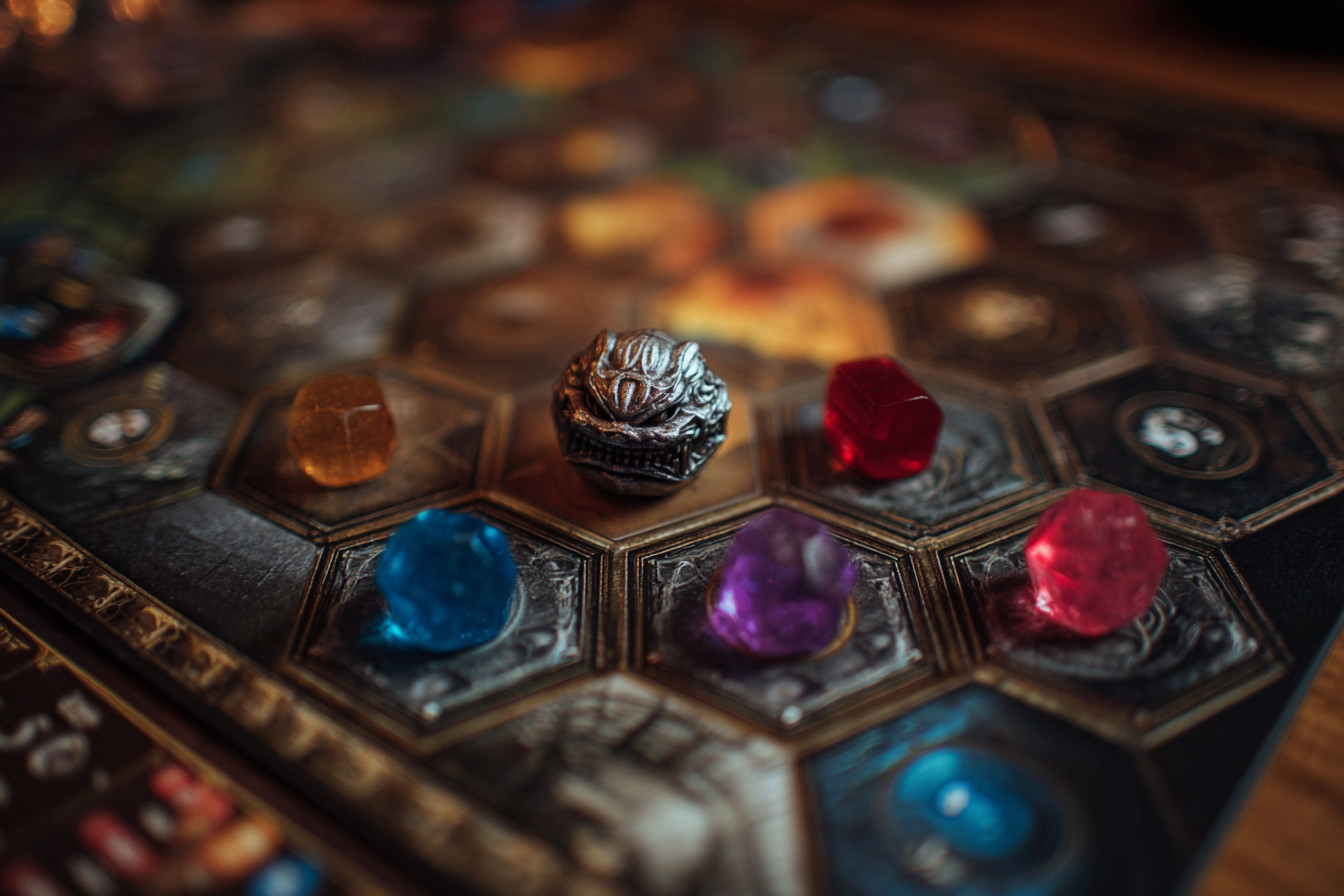

Mage Knight At A Glance
| Aspect | Details |
|---|---|
| Designer | Vlaada Chvátil |
| Year Published | 2011 |
| Play Time (Solo) | 60-120 minutes |
| Complexity | Heavy |
| Recommended Age | 14+ |
| Our Rating | 10/10 |
Mage Knight is probably the most brutally honest game I’ve ever experienced. Mistakes you make three turns ago can penalize you for the next three turns. If you misjudge your spell sequencing, you’ve wasted precious resources you cannot afford to lose. If you over commit to capturing a city, you may run low on movement and be left stranded in the wilderness with insufficient supplies.
I have an Excel file to track my Mage Knight experiences. I’ve successfully completed a Mage Knight campaign on normal difficulty approximately 40% of the time. I’ve completed a Mage Knight campaign on hard difficulty perhaps around 20% of the time. I have never completed a Mage Knight campaign on nightmare difficulty. Every loss I’ve suffered is another lesson learned in optimizing the gameplay of Mage Knight. Every victory I’ve achieved seems to demonstrate that I have truly mastered the puzzle.
Mage Knight is not a game you play; Mage Knight is a puzzle you solve. And if you have a knack for solving puzzles, you‘ll find yourself completely absorbed in this puzzle.
What Mage Knight Truly Is
As a wizard, you’re traveling through a foreign land filled with dangers. As a wizard, you have a deck of spell cards. Each turn you play cards to provide yourself with movement points, attack points, and special abilities. Using these resources, you travel through the map, battle monsters, capture cities, etc., and as you accomplish each of these objectives, you earn points.
This is essentially the surface-level of Mage Knight. The true nature of Mage Knight is a decision tree so complicated that you literally feel like you‘re solving a puzzle with incomplete information at every turn. At every turn you have limited resources (movement, action points, spells you hold in hand). You need to allocate those limited resources between movement, combat, and exploration. If you incorrectly allocate your resources, you‘ll likely be left with no recourse – unable to reach the next city, unable to defeat the monster you face, unable to complete the objective you‘re attempting to complete.
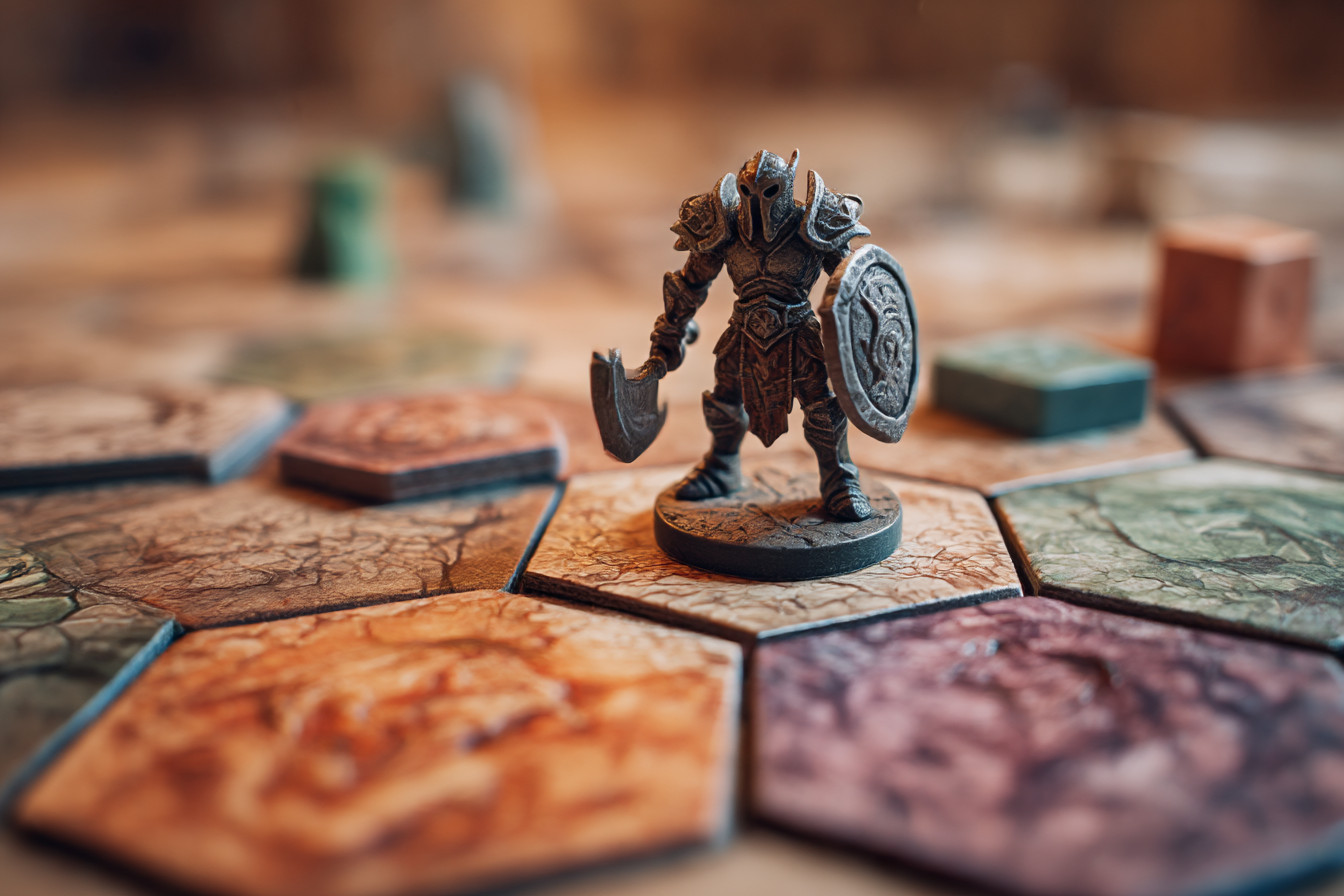
When you add the multiplayer version of Mage Knight into the mix, it allows for simultaneous gameplay and competition for available resources. When playing Mage Knight solo, however, you are simply competing against a pre-determined point total. However, the fundamental puzzle remains the same – how do you sequence your spells to maximise your turn value?
Why Solo Mage Knight is Perfect for Puzzle Enthusiasts
Mage Knight was originally designed as a solo experience. The multiplayer feature was later added as an expansion pack. Because of this distinction, the solo experience of Mage Knight is both intentional and elegant.
While playing Mage Knight solo, you are only responsible for your own decisions and actions. You are not required to manage the turns or time of other players at the table. As such, you can spend as much time as you desire analysing your potential choices and calculating your possible movements and attacks several turns in advance. Additionally, there is no time limit imposed upon you by the game itself – only the time limits you impose on yourself.
Because of this design choice, the experience of playing Mage Knight solo can be very meditative for those who enjoy optimizing their gameplay. You sit down, you examine the current state of the board, you determine how many movement and attack points you have available, you plan your turn, and then you execute that turn. After which, you determine if your planning and execution were accurate.
Most games place penalties upon you when you spend too much time making a decision – the other players at the table grow impatient and/or bored. As mentioned earlier, Mage Knight does not place a penalty on you for spending too much time making a decision – you decide how much time you wish to spend on a decision.
The Decision Space: Why Every Turn Counts
Let me describe to you the type of decision you encounter at each turn in Mage Knight.
You currently possess five cards in your hand. Each card displays the amount of movement, attack points, and special abilities each card holds. You need to capture a city before the end of the day – the city you are targeting is three spaces away from you. You also have an enemy within one space of you.
Do you:
A) Play a card that grants you maximum movement, and hope you have sufficient attack points to capture the city.
B) Attack the enemy first, using two turns, and then move to the city.
C) Use a card to move to the city, prepare to capture the city, and then capture the city the next turn.
D) Save your cards, take a crystal (a form of currency) instead, and delay advancing until tomorrow.
Each of these options has a unique combination of risk and reward associated with it. Option A offers you rapid progress, but at the cost of possibly wasting cards and failing. Option B wastes a turn. Option C delays progress, but guarantees the city will fall to you. Option D sacrifices some short-term advantages, but preserves flexibility.
There is no “obvious” correct response. The correct response is dependent on your current position relative to your resources, the cards available to you, the number of remaining days, the types of monsters/cities that are approaching, and whether you are winning or losing according to your score.
It is this element of uncertainty that makes Mage Knight so captivating. Each turn, you are faced with real decision-making, and the outcome of that decision will affect your future in a meaningful way. You cannot rely on a standard strategy – you must continually assess the current state of the board and make decisions based on the specific conditions of your game.
Deck Development: Creating Your Wizard
At the beginning of your Mage Knight campaign, your spell deck is relatively weak. You have a few basic spells that grant you limited resources. Throughout your campaign, you purchase new spells and abilities, and your deck becomes progressively stronger and more complex.
This represents a natural progression. Early in your campaign, you are weak and struggling. In the middle of your campaign, your spell combinations begin to pay off. Near the end of your campaign, your deck is firing on all cylinders.
However, this design aspect reveals a deeper truth – as your spells become more powerful, the number of complex decision trees increases exponentially. Early in your campaign, the decisions you make are straightforward – you play the best card you have available. Later in your campaign, the decisions you make are more intricate – you must consider how a particular spell will interact with another spell, while blocking a third spell.
Your deck development is analogous to character development in an RPG, although the mechanics of character development in Mage Knight are represented through increasing complexity in your deck, rather than simple statistical improvements.
Optimization: Why Mastery Remains Elusive
I’ve now played Mage Knight to the extent that I am familiar with the majority of common spell combinations. I can calculate the movement of several turns in advance. I understand positioning and resource utilization.
Yet, I continue to make mistakes. I continue to discover optimal ways to utilize my cards that I had previously overlooked. I continue to fail at campaigns, and immediately realise three alternative methods I could have used to succeed.
The optimization space for Mage Knight is enormous. Spell combinations that I believed to be optimal contained additional synergy I had overlooked. Card sequencing I believed to be optimal created inefficiencies I did not anticipate. Positions I believed were fixed held hidden flexibility.
Each of my losses contains an opportunity to learn from them. Recently, I attempted a nightmare difficulty campaign and lost on the seventh day of eight days. I was so close to completing the campaign, and I made a critical positioning error that separated me from the next city. I replayed the entire campaign, and I made sure to properly implement that positioning sequence.
This drive to optimize, to master the puzzle, is what sets Mage Knight apart from virtually all other games. You are constantly seeking the optimal method of play, and you rarely, if ever, achieve it.
Difficulty Levels: Meaningful Progression
Mage Knight includes multiple difficulty settings that change the gameplay experience in meaningful ways. On easy difficulty, you receive increased resources and fewer difficult opponents. On normal difficulty, you receive standard resources and opponents. On hard difficulty, you receive fewer resources and more difficult opponents. On nightmare difficulty, the difficulty is nearly punitive.
I generally play on hard difficulty. Hard difficulty provides a challenge that is sufficiently great that failure is not merely the result of chance – it is the direct result of suboptimal decisions – but it is possible to achieve victory by making the optimal decisions. I estimate I succeed at least 30-40% of the time. Nightmare difficulty is cruel. I have succeeded at least twice in dozens of attempts.
The key point – regardless of difficulty setting, the game is played in the exact same manner. The only difference is in the constraints placed upon you by the difficulty setting. This results in a natural progression of difficulty – you master the normal difficulty, and then you attempt the hard difficulty, followed by the nightmare difficulty.
I am aware of people who have spent hundreds of hours playing Mage Knight and are unable to regularly defeat the nightmare difficulty. That is how brutal it is.
Rules Overhead & Accessibility
Here’s the criticism – Mage Knight has a high rules overhead. The rulebook is large. Learning the game takes a minimum of thirty minutes. Teaching others how to play the game takes even longer. The game does not spoon feed you.
For the intended audience (people who enjoy puzzles, optimization enthusiasts, and people who appreciate learning new systems) this is not a problem. However, this means that Mage Knight is not easily accessible.
On the plus side, once you comprehend the system, the rules become second nature. You cease to refer to the rulebook. The overhead diminishes.
Additionally, because Mage Knight is a solo experience, you can spend as much time as you need learning. You do not need to rush to learn the rules to maintain the pace of the table. You can learn at your leisure, and as you see fit.
Is Mage Knight Still Relevant Today?
Mage Knight was released in 2011. It is 2025. Since then, thousands of new games have been released. Many of those games have attempted to emulate the puzzle-like complexity of Mage Knight.
No game has successfully emulated the puzzle-like complexity of Mage Knight. The core puzzle of Mage Knight is just as engaging today as it was in 2011. The spell combinations are still elegant. The difficulty scaling is still logical. The experience of playing Mage Knight solo is still deliberate and purposeful.
The quality of the components of Mage Knight is adequate. They function well, but they are not elaborate. The card stock is good. The tokens are clear. The organization of the rulebook is good.
The only critique I would offer is that the length of a Mage Knight campaign can be lengthy, particularly when you are struggling. A failed campaign on hard difficulty, for example, could take upwards of ninety minutes to complete, and conclude with a loss. Not all gamers will find this enjoyable. However, for puzzle enthusiasts, the frustration of being defeated is precisely the point.
Why You Should Experience This Game Solo
If you enjoy solving puzzles and optimizing your gameplay, Mage Knight is a must-play. This is a puzzle game masquerading as a fantasy combat game.
If you are interested in studying game design through the lens of decision trees and resource utilization, Mage Knight is a case study.
If you are willing to view failure as an opportunity to learn, every defeat is a lesson in optimal gameplay.
If you want to experience a game that assumes you are intelligent, and does not spoon-feed you, Mage Knight is ideal.
If you are willing to dedicate 60-120 minutes of intense mental effort to the game, Mage Knight is the game for you.
You should not experience Mage Knight if:
You seek a casual gaming experience
You dislike games that clearly illustrate the consequence of poor decision-making
You prefer immediate gratification and consistent successes
You enjoy games where luck can compensate for suboptimal gameplay
You enjoy games that can be completed in under 30 minutes
Mage Knight is niche. It is not suitable for everyone. However, for those who it is suited for, Mage Knight is ideal.
Conclusion
Mage Knight is a 10/10 puzzle experience. The number of potential choices at your disposal is extensive. The number of opportunities to optimize your gameplay is infinite. The design of the game as a solo experience is both deliberate and elegant. The difficulty curve provides a natural progression from an easy to almost impossible experience.
I have experienced dozens of failures and dozens of successes in Mage Knight. I am far from mastering the nightmare difficulty. I am actively working towards achieving the goal of consistently beating the hard difficulty. My motivation to improve, to optimize, to solve the puzzle accurately continues to attract me to the game.
This game demonstrates that board games can be puzzles just as interesting as physical puzzles or logic problems. If you are interested in exercising your mind through decision-making and resource optimization, Mage Knight is unparalleled.

Nicholas teaches secondary school history by day and campaigns through fantasy worlds by night. He writes about legacy and campaign games—the epic, months-long sagas that build friendships, stories, and the occasional scheduling nightmare.